
Yield8 Expands Asian Private Credit Portfolio with ONiON Mobility
KIP adds ONiON Mobility to Yield8, its first mobility position: a loan repaid from EV lease income in Cambodia, with a USDC reserve onchain.


Kaia Investment Partners (KIP) has added ONiON Mobility, an electric vehicle operator in Cambodia, to Yield8, its tokenized Asian private credit fund. Yield8 already holds maritime finance in Indonesia through Galactica, gas station financing in Korea through YieldCore, small business and earned-wage loans in Indonesia through Forest Jalan, and real estate- and stock-backed lending in Korea through 8percent. ONiON Mobility is the fund's fifth position and its first in mobility.
Every position meets the same bar: a real business with financing needs, assets that can be identified, and cash flow. This investment was conducted through Musubi, an RWA platform that applies onchain financing structures to mobility assets. KIP plans to evaluate the effectiveness of Musubi’s onchain financing structure before gradually expanding its investment scale and entering additional markets.
Working with MVL
The investment is part of a strategic RWA collaboration between KIP and MVL (the company behind TADA), a ride-hailing platform founded in Singapore that grew on a zero-commission model for drivers. TADA and ONiON Mobility together link everyday transport demand with electric vehicle operations.
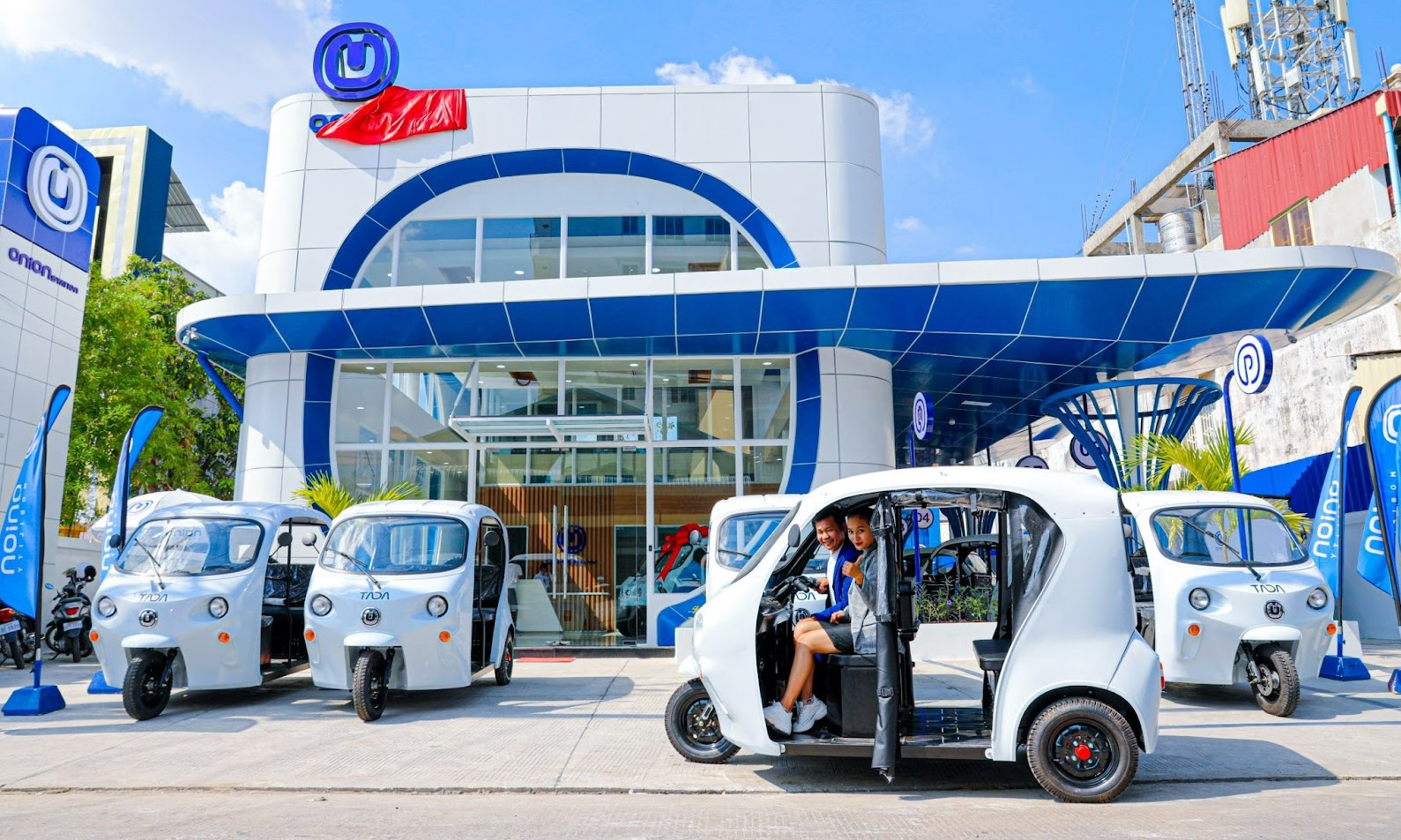
ONiON Mobility runs electric vehicle, rental and battery infrastructure businesses in Cambodia, and its vehicles serve local transport through TADA. Vehicle usage and the rental payments it generates are the economic activity behind this financing. KIP adds the investment structuring and is working with TADA on a model that connects mobility assets to onchain finance.
How the structure works
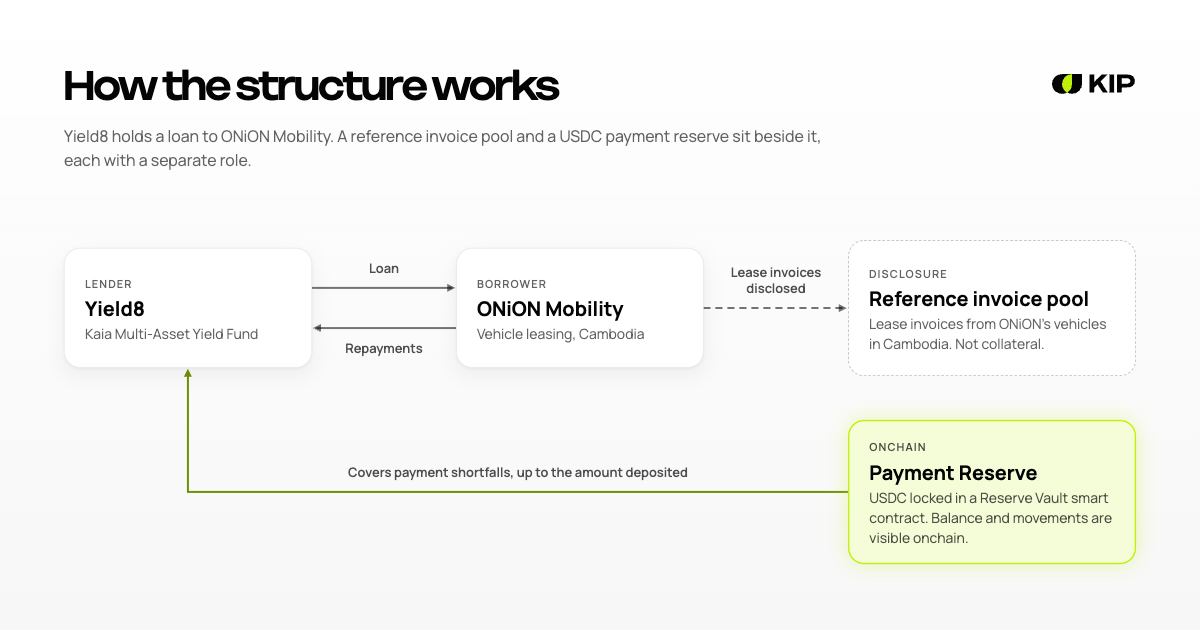
Yield8's exposure is a loan to ONiON Mobility. Next to the loan, the structure defines a reference pool of invoices from ONiON's vehicle leasing operations in Cambodia. The pool records where the business runs, what kind of activity it is, and the payments tied to it, so investors can see what sits behind the loan. The loan and the invoice pool are kept separate. The invoices are there for disclosure and are not collateral.
The second component is an onchain Payment Reserve. A separate USDC reserve is deposited and locked in a designated Reserve Vault smart contract. Funds leave the vault only under defined conditions, and anyone can check its balance and every deposit and withdrawal on the blockchain.
If a payment falls short during redemption, the reserve covers the gap through a settlement process agreed in advance. It can only pay out what has been deposited into it, and it does not guarantee principal or returns.
Why the reserve sits onchain
In traditional private credit, investors rely on the manager's periodic reports to see the state of the assets and where the money is. Here, the reference asset information sits alongside onchain records of the reserve's holdings and movements. Investors can verify the reserve directly instead of waiting for the next report.
The structure puts asset identification, smart-contract custody of the reserve and onchain payment management in one place. KIP built it to narrow the information gap between investors and the fund manager, and to tighten the operating framework for RWA finance that links the real economy with digital capital.
The Yield8 portfolio
Yield8 is the tokenized form of the Kaia Multi-Asset Yield Fund. It targets an APR of 8% or more from Asian private credit. That figure is a target, not a guarantee. Users reach Yield8 through SuperEarn vaults, which set their allocation to it under their own risk management and asset allocation strategy. KIP launched the fund with three portfolios and plans to grow it to more than ten curated projects. With ONiON Mobility, it now holds five:
- Galactica (Indonesia, maritime finance): ship financing with PT Pelayaran Korindo, which has nearly 50 years in shipping. Returns come from long-term, fixed-rate ship rental contracts. Its first deal, Pegasus, financed a natural gas vessel with $25 million over 3 months.
- YieldCore (Korea, gas station financing): short-term funding for gas stations to buy fuel inventory, backed by their future sales and real estate under a trust arrangement with a major Korean securities institution. A $500,000 pilot returned APRs in the high teens, and the program is expanding to a $1 million deal over 3 months.
- Forest Jalan (Indonesia, small business and earned-wage loans): short-term loans through Grab and the JOOB job platform, which connect to over 21,000 businesses and 440,000 workers. Loans are backed by business sales and payrolls. In the pilot, defaults were 0.2% for business loans and 0% for wage advances.
- 8percent (Korea, collateral-backed lending): receivables from an FSC-licensed online investment-linked lender, backed by real estate and securities accounts. As of April 2026, 8percent had originated KRW 1.31 trillion, with a 30+ day delinquency ratio of 2.04%.
 Kaia Marketing Team
- ONiON Mobility (Cambodia, electric mobility): a loan repaid from electric vehicle lease income, with the reference invoice pool and onchain payment reserve described above.
From Cambodia to Singapore
KIP launched Yield8 in April to open Asian private credit, a market mostly reserved for institutions, to onchain capital. Each position connects the fund to a different part of Asia's real economy, with the asset information and the onchain structure in view.
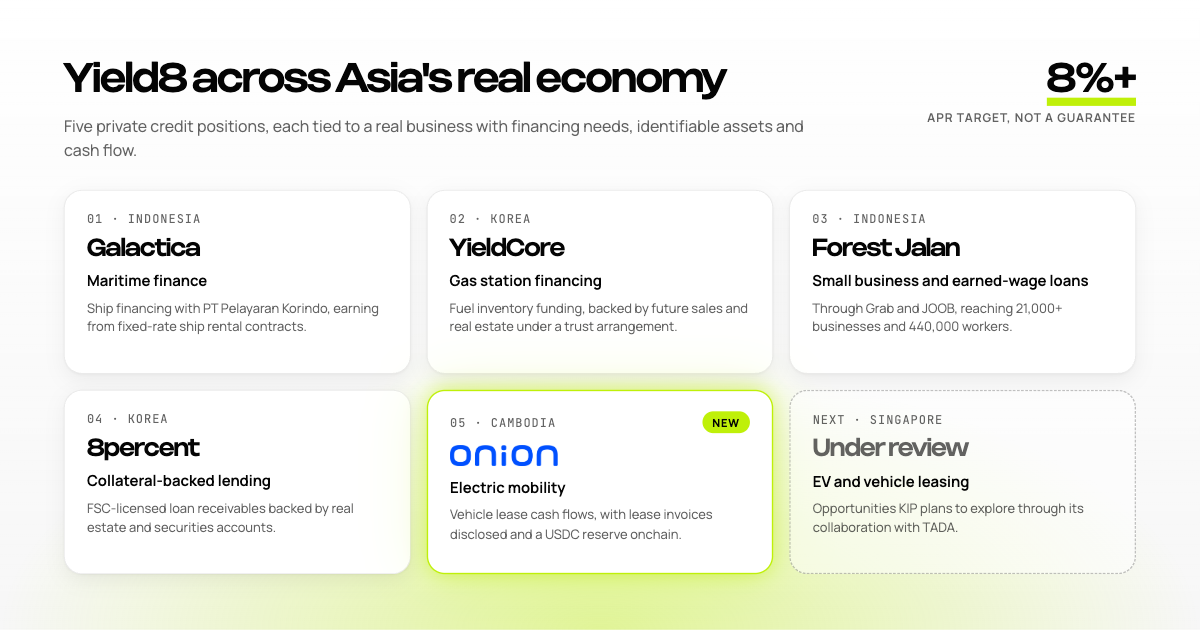
Cambodia is the starting point. What KIP learns here about identifying assets and managing payments onchain could support future work in Singapore's electric vehicle and vehicle leasing sectors. Through the collaboration with TADA, KIP will look for RWA opportunities that fit each market's operating environment and asset characteristics.

"After ships and loan receivables, we are now connecting mobility to onchain capital: Asian real-world assets with cash flows you can confirm. With a structure where investors can check both asset information and reserve flows onchain, we will keep raising the transparency of RWA investment." – Uno Lee, CEO of KIP
"Musubi is a driver-first financial system. Driving history becomes credit, and the driver gets a car before the bank paperwork. We are looking in the same direction as KIP's vision of RWA for everyone." – Kay Woo, CEO of TADA
About Kaia Investment Partners
Kaia Investment Partners is the investment and incubation arm the Kaia DLT Foundation set up to connect traditional finance with the blockchain ecosystem. Kaia is building onchain financial infrastructure for Asia that covers stablecoin payments and real-world assets.
This disclosure is provided solely for transparency and general informational purposes. It does not constitute an offer, solicitation, or investment advice. The reserve described above covers shortfalls only up to the amount deposited and does not guarantee principal or returns. Private credit investments carry risk, including loss of principal. Pilot and historical figures describe past results and do not guarantee future performance.