
Securing Korea’s Digital Financial Sovereignty: Kaia Drives the KRW Stablecoin Agenda
Kaia is building the foundation for South Korea's Web3 and AI ecosystem with a native KRW stablecoin. Explore our 160-page technical blueprint presented at the National Assembly and our regulatory sandbox proposal in Singapore.

Over 90% of the global stablecoin market currently runs on the US dollar. As the US actively consolidates its digital financial dominance through these dollar-pegged assets, "digital dollarization" is accelerating globally. For South Korea to maintain its financial sovereignty and competitiveness in the Web3 and AI era, developing a robust domestic alternative is no longer optional; it is an urgent necessity.
To prevent Korean capital from becoming entirely dependent on foreign fiat rails, the Kaia DLT Foundation is spearheading a two-pronged approach: delivering comprehensive technical blueprints to industry leaders at the National Assembly, and proposing actionable regulatory sandboxes directly to the South Korean government.
The National Assembly Consensus: Shifting the Focus to "How"
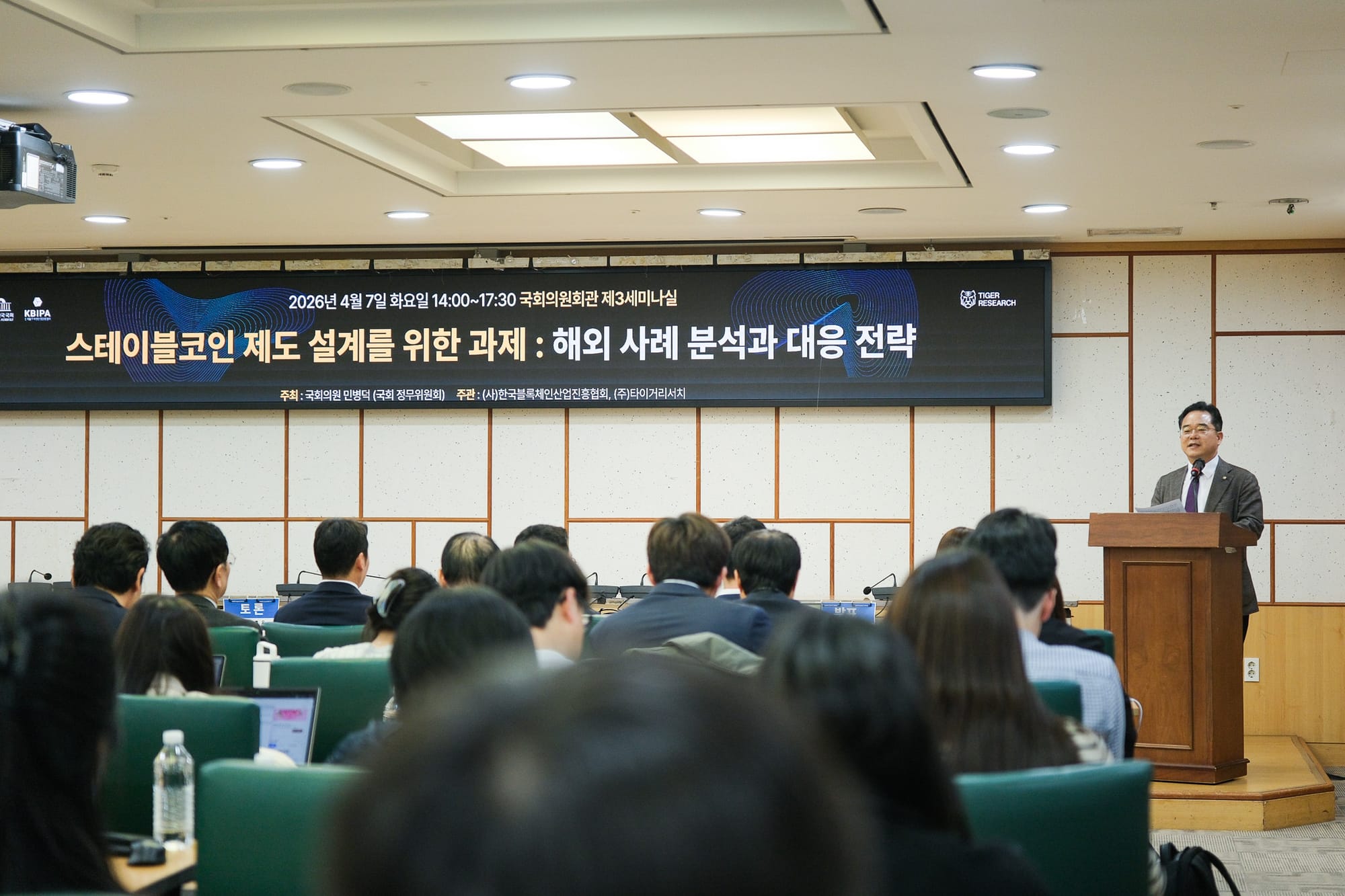
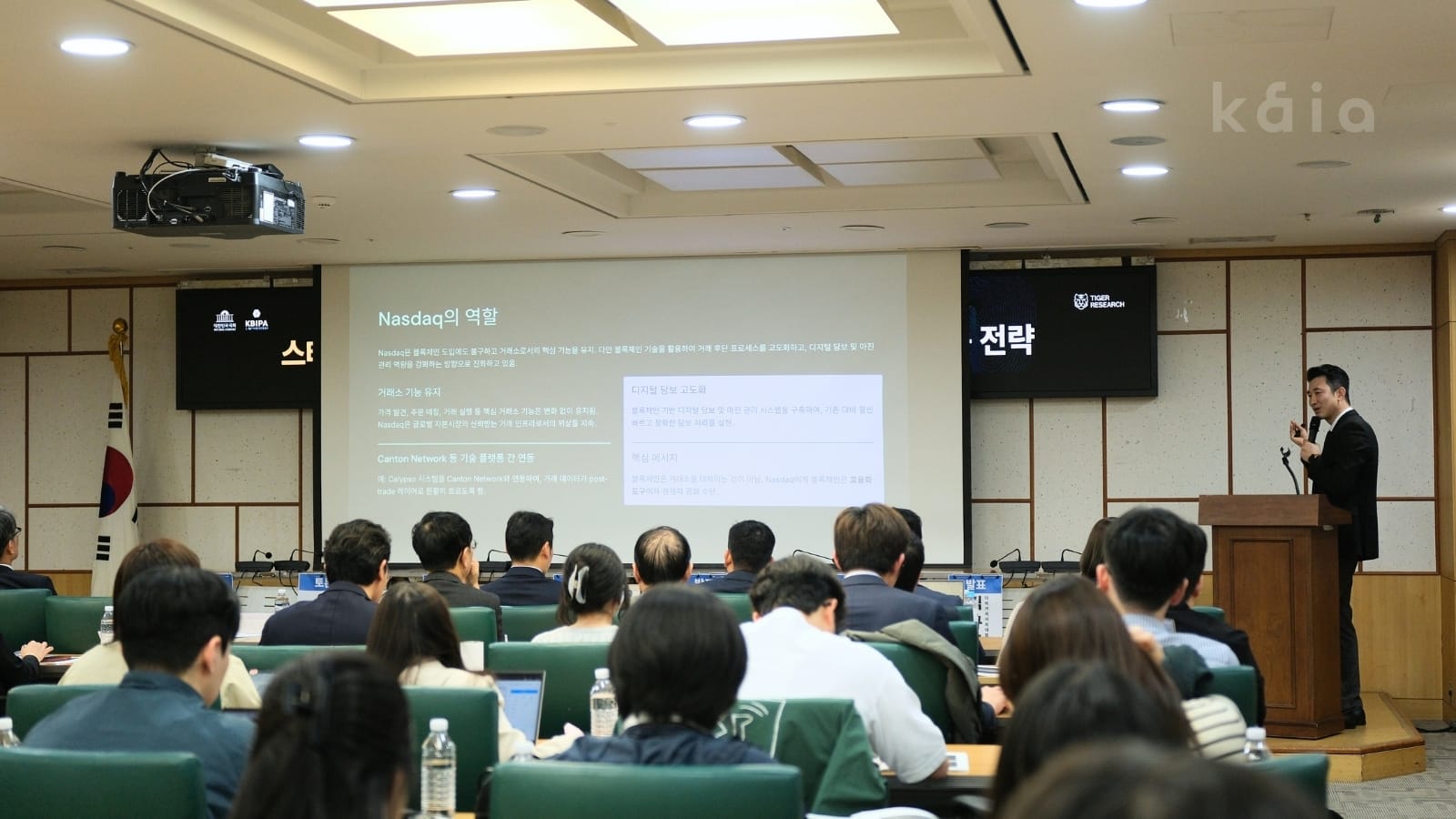
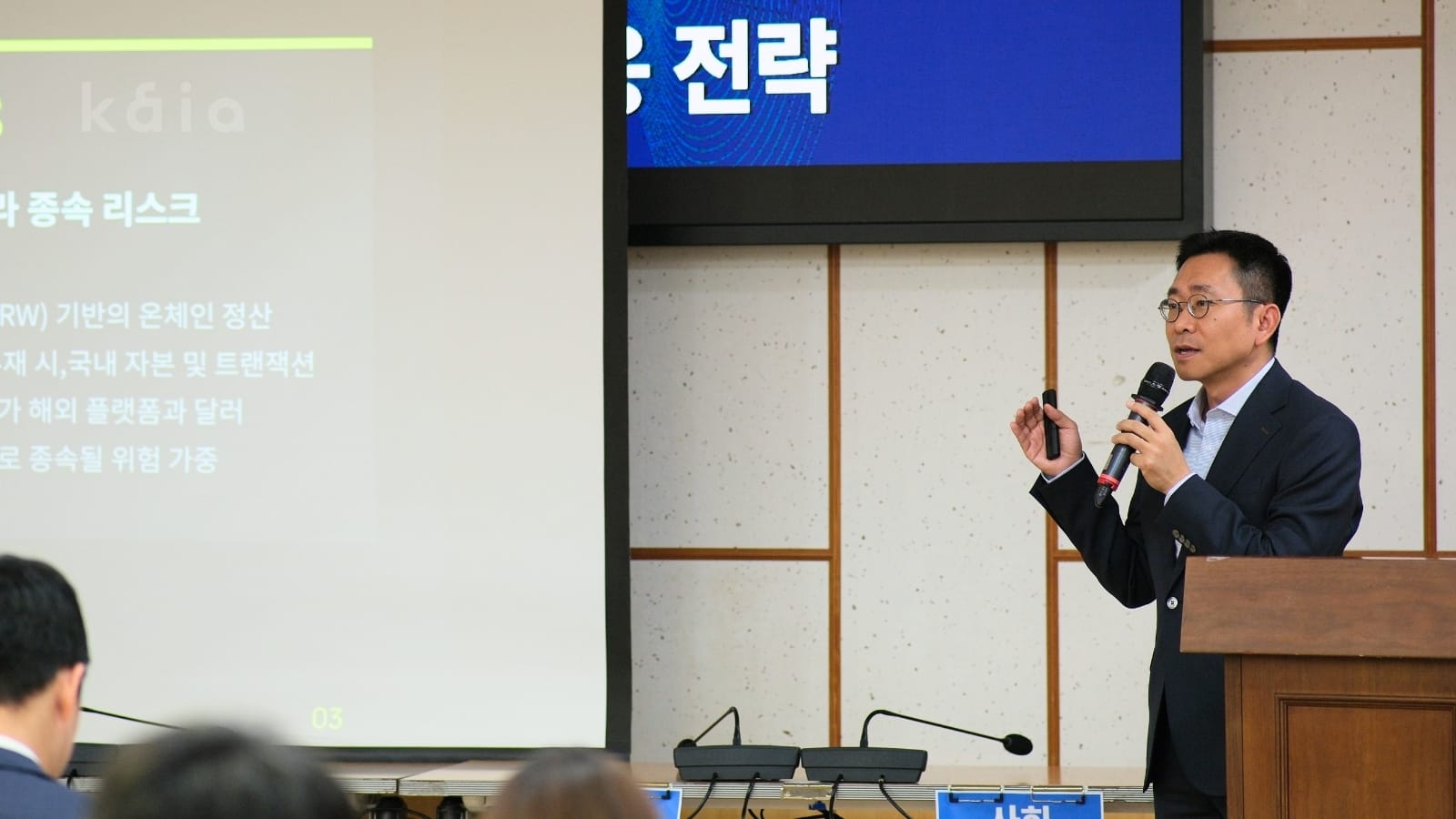
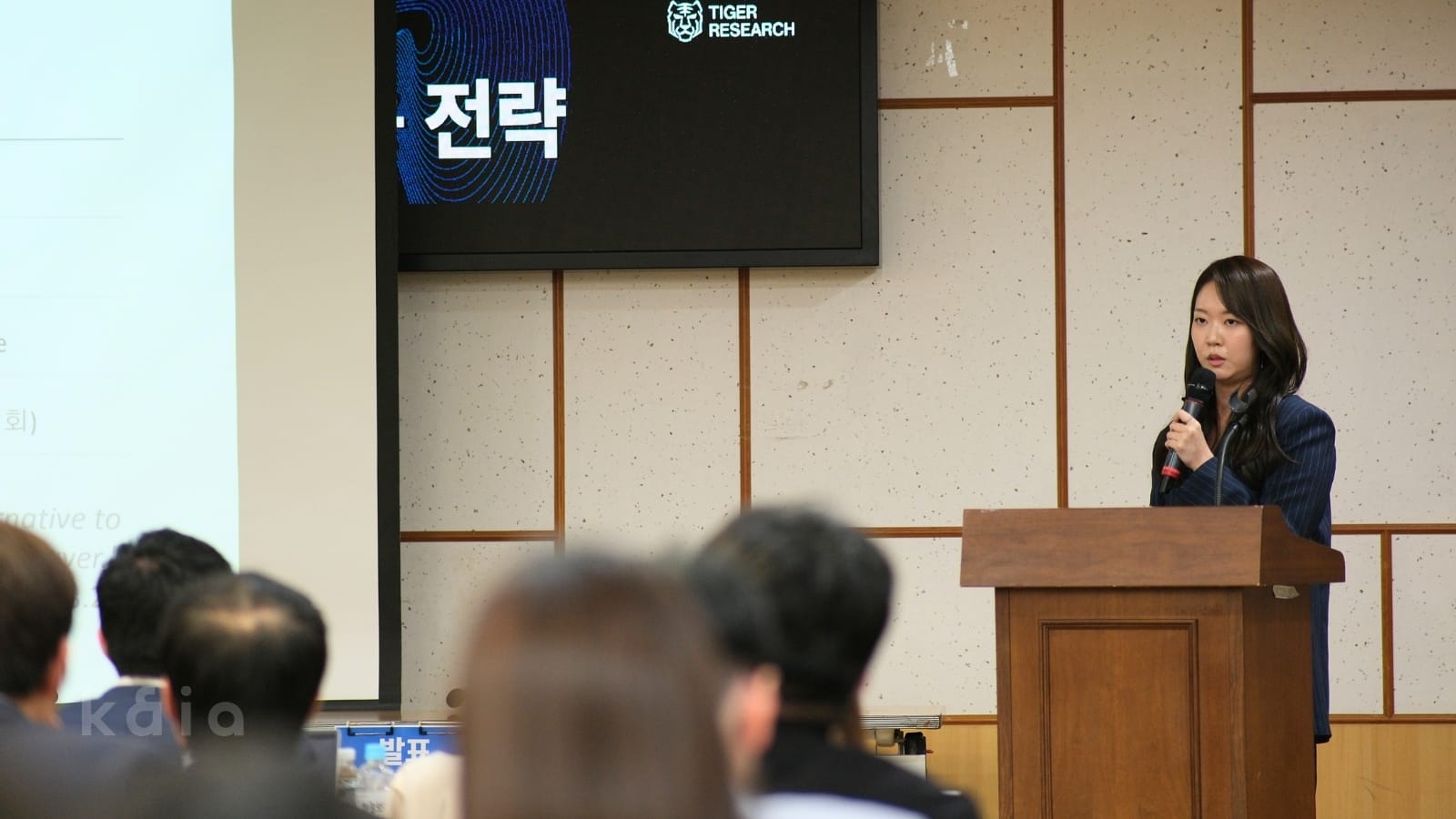
On April 7, 2026, industry leaders, policymakers, and innovators gathered at the National Assembly for a landmark seminar on designing stablecoin institutions, hosted by Assemblyman Min Byung-deok. The overarching consensus was clear: the global market is accelerating rapidly, and domestic infrastructure must adapt immediately.
The stage is set at the National Assembly to discuss the future of the South Korean stablecoin. 🇰🇷
— Kaia (@KaiaChain) April 7, 2026
In just a few moments, Kaia Chairman @seo_sangmin will present our comprehensive KRW stablecoin architecture proposal to legislative and industry leaders.
Live coverage below. 🧵 pic.twitter.com/Xhs1Cu8rfo
During his keynote address, Kaia Foundation Chairman Dr. Sangmin (Sam) Seo delivered a wake-up call to the industry. He stressed that stablecoins have evolved far beyond simple crypto tokens: they are the core payment infrastructure bridging traditional finance and Web3.
"While Korea debates the 'Who' and 'What' of stablecoin issuance, digital dollarization is accelerating," Dr. Seo noted. "If we wait for perfect regulations before laying the technical groundwork, we risk losing our digital financial sovereignty. It is time to focus on the 'How'."
@KaiaChain Chairmain @seo_sangmin delivered a wake-up call: Korea's debate over "Who and What" must end. It's time to focus on the "How."
— Kaia (@KaiaChain) April 7, 2026
While Korea debates, digital dollarization accelerates. If we wait for perfect regulations before laying the technical groundwork, we risk… pic.twitter.com/cPCz7HO7ZK
To answer this, Kaia released a comprehensive, 155-page architectural blueprint detailing the four core layers required to safely build and operate a KRW stablecoin (available at https://kaia.io/krw):
- Infrastructure: Secure, multi-chain environments.
- Smart Contracts: Multi-sig and mint/burn security protocols.
- Issuance & Settlement: 1:1 pegging and reserve matching.
- Compliance: AML/CFT controls and real-time audits.
Dr. Seo also shared the results of a recent Proof of Concept (PoC) for cross-border remittances between Korea and Vietnam using stablecoin infrastructure. The results were highly promising, demonstrating an 87% reduction in transaction costs and instant settlement times of under three minutes, proving the tangible real-world benefits of this technology.
— Kaia (@KaiaChain) March 26, 2026
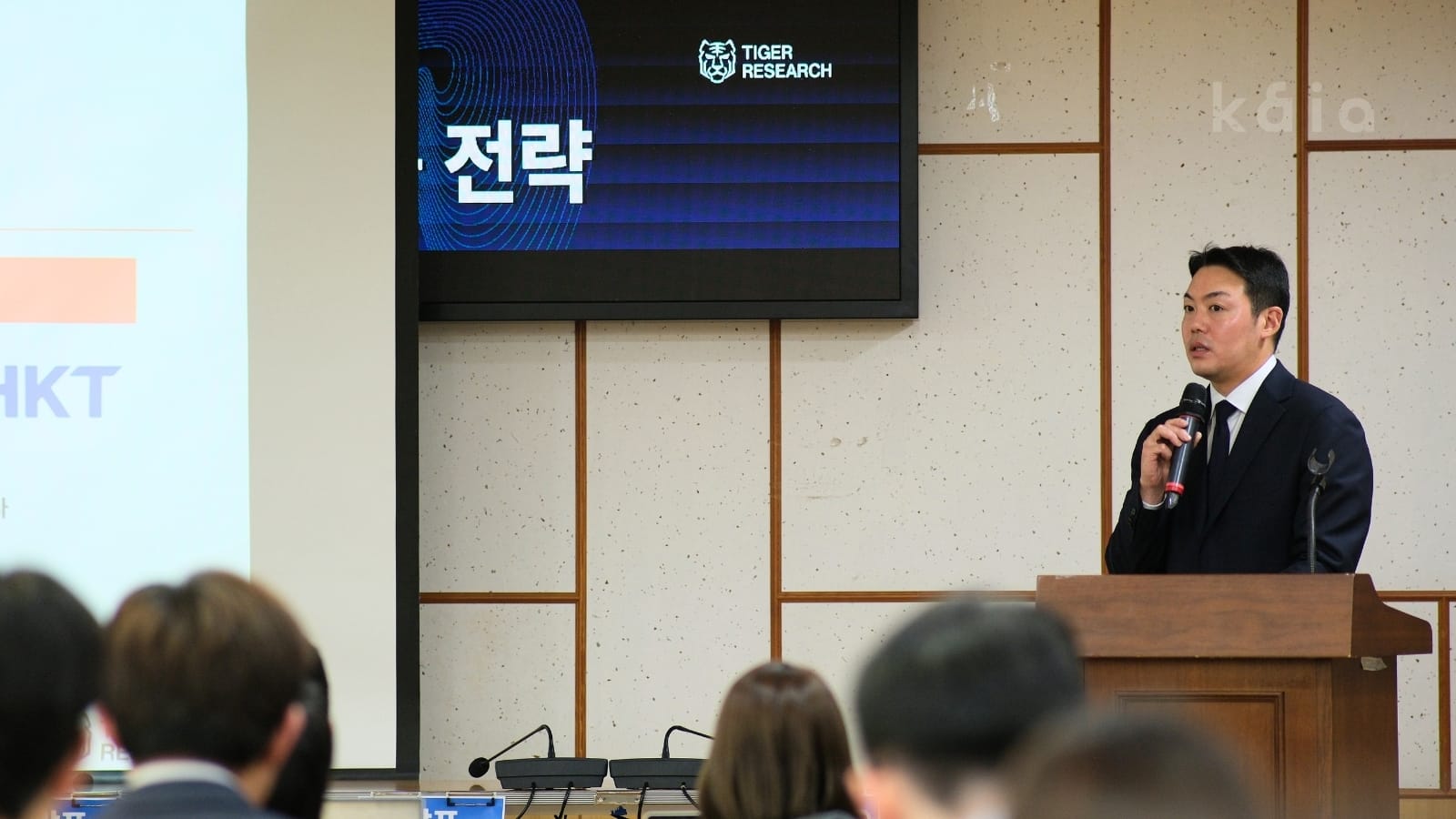
This urgency was echoed by other prominent voices at the seminar. Prof. Jongsub Lee of Seoul National University highlighted that without a KRW stablecoin, Korea's STO market cannot achieve true T+0 instant settlement. Daniel Kim, CEO of Tiger Research, pointed out the critical mismatch between Korea's booming Web3 startup ecosystem and its lagging regulatory frameworks compared to hubs like Japan and Singapore. Meanwhile, Soomin Kim, Head of Korea at Plume, proposed pragmatic workarounds like an ADR (American Depositary Receipt) model to attract foreign capital while domestic legislation catches up.
The Singapore Proposal: Moving into Active Deployment
While driving the technical conversation at home, Kaia is simultaneously working with policymakers to create the environments needed to test these technologies. At the recent Overseas Koreans' Meeting in Singapore, Chairman Seo presented a formal proposal to the South Korean government, emphasizing that local infrastructure must move past the experimental phase and into active deployment.
It was an honor to present my vision for South Korea’s digital economy to President @Jaemyung_Lee during his state visit to Singapore.
— Sangmin Seo (Sam) {&} (@seo_sangmin) March 2, 2026
Just as semiconductors and high-speed internet drove our previous growth, we now need to build financial infrastructure fit for the AI era.
I… pic.twitter.com/K03Vq7acBE
The proposal outlined a comprehensive approach to the intersection of Web3 and AI infrastructure, presenting three specific initiatives to the Financial Services Commission (FSC) and the Ministry of Science and ICT (MSIT):
- Establish a KRW-based stablecoin sandbox led by the FSC to safely test and scale domestic digital payments.
- Launch tokenization experiments focusing on public infrastructure and AI computing assets.
- Build a decentralized platform that allows domestic AI companies to easily access and pay for global digital resources.
The government’s response has been pragmatic and encouraging. The FSC has officially recognized stablecoins as a crucial new payment method and is currently drafting the comprehensive Digital Asset Basic Act, scheduled for enactment in the first half of 2026. During this process, they have committed to creating institutional opportunities for Web3 builders to verify their business models in real-world conditions.
Simultaneously, the MSIT acknowledged the need for regulatory refinement and is actively reviewing ways to integrate blockchain and AI infrastructure verification into upcoming national R&D initiatives, paving the way for a collaborative demonstration environment.
A Parallel Path Forward
The overarching message from both the National Assembly and the Singapore summit is clear: South Korea is at a critical crossroads. Building a national digital economy requires clear rules of engagement alongside scalable infrastructure.
Kaia is working directly with policymakers and industry partners to shape this framework from the ground up. By building technical infrastructure in parallel with regulatory developments, Kaia is laying the groundwork for the next evolution of Korea's capital markets, ensuring that the nation remains a competitive, sovereign force in the global digital economy.
Read our full KRW Stablecoin Architecture Proposal at kaia.io/krw.